Tyneham in Wartime
WAAFs, radar stations, and the 1943 evacuation
Tyneham wartime timeline
War was declared in 1939, and for that first year Tyneham village continued much as before. In 1940, Dragon's Teeth anti-tank obstacles were installed on the path to Worbarrow Bay as part of Operation Sea Lion defences. Then, in June 1941, the RAF requisitioned Tyneham House to billet WAAFs operating the Brandy Bay radar station. For the next two years, from 1941 to 1943, those WAAFs lived in the village alongside the remaining civilian population. In November 1943 the War Office requisitioned the entire village, giving all remaining residents 28 days to leave. On 19 December 1943 Tyneham was emptied, and a note was pinned to the church door.
The war reaches Tyneham: 1940
For the first year of the war, Tyneham's thirty-odd families lived largely undisturbed. The village was remote, the roads narrow, and the nearest targets of strategic importance were well to the east and west. But the geography that had kept Tyneham isolated for centuries also made it militarily significant. The cliffs above Worbarrow Bay gave clear sight lines across the Channel. The valley offered a concealed approach from the sea.
In 1940, as the threat of German invasion reached its peak, the army installed a row of Dragon's Teeth (squat concrete anti-tank obstacles) across the path from Tyneham to Worbarrow Bay. Their purpose was to block the route inland if German tanks landed on the beach under Operation Sea Lion. The Dragon's Teeth are still there, embedded in the bank at the edge of the track, and still passed by every visitor walking down to the bay today.
The RAF takes Tyneham House: June 1941
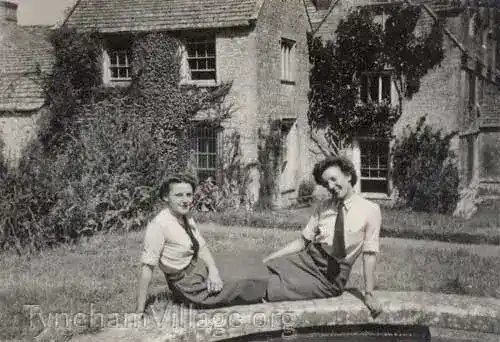
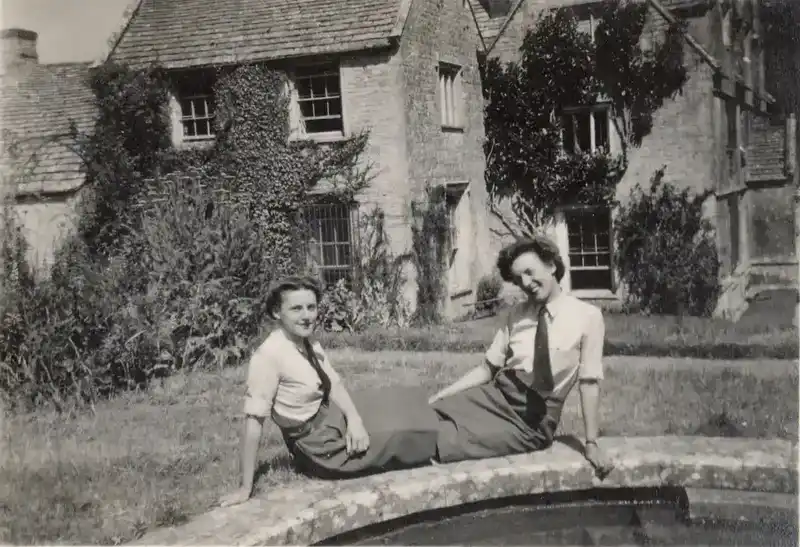
Two years before the famous village evacuation, the war came directly to Tyneham’s gates. In June 1941, the Royal Air Force requisitioned Tyneham House, the Elizabethan manor at the heart of the estate, to billet women of the Women's Auxiliary Air Force (WAAF). Their role was to operate the Chain Home radar station at Brandy Bay, the remote cove directly below Gad Cliff on the coast west of the village.
The Bond family, who had owned the estate for over 250 years, were not evacuated at this point; they were asked to move out of the main house and into Museum Cottage in the village, a considerably smaller arrangement. The grand house they left behind, with its Elizabethan Purbeck stone facade and high Victorian windows along the ground floor, was handed over to the RAF.
The WAAF operators were first billeted in the old Rectory. When that became overcrowded, they moved into Tyneham House itself. One account survives from a woman who was a 19-year-old radar operator at the time:
"I was a 19-year-old radar operator living in what was the old rectory… then they decided the girls should be billeted in what was the old manor house, a beautiful old house."
The radar station at Brandy Bay was part of Britain’s Chain Home network, the world’s first operational early-warning radar system. The stations dotted along the English coast from the Orkney Islands to Cornwall had provided the crucial minutes’ warning that allowed Fighter Command to intercept Luftwaffe raids during the Battle of Britain in 1940. The WAAF operators who ran them, tracking the height, speed, and bearing of incoming aircraft, were essential to the system. Several thousand women served in Chain Home stations by 1943.
Life in wartime Tyneham: 1941–1943
For two years, the village existed in an unusual dual existence: the remaining farming families going about their routines, while a group of young servicewomen lived in the manor house and walked to their posts on the cliffs. The inhabitants adapted to their wartime neighbours. Ernest Whitlock, a farm labourer at No. 2 The Row, became an informal barber for the troops and airmen stationed in the area: one of the small domestic accommodations that wartime required.
The village was not in a front-line location, but it was not untouched by the war. The cliffs and heathland above were in active use. The approaches to the bay were blocked. The great house was full of servicewomen rather than the Bond family. Thomas Bond, the last squire of Tyneham, watched the steady transformation of his estate from Museum Cottage.
The 1943 evacuation
In November 1943, the War Office requisitioned the rest of the village. The scale of the planned D-Day landings, then less than seven months away, required a vast training ground where armoured divisions could rehearse amphibious assault against live fire. The entire stretch of coast from Lulworth to Kimmeridge was needed. Every remaining inhabitant of Tyneham was given 28 days to leave.
On 19 December 1943, the last residents departed. A typed note, signed simply “The Villagers”, was pinned to the door of St Mary’s Church:
"Please treat the church and houses with care; we have given up our homes where many of us lived for generations to help win the war to keep men free. We shall return one day and thank you for treating the village kindly."
They did not return. After the war, successive governments found reasons to retain the land for military training. The promise implicit in the evacuation notice was never kept. The village remained in military hands, the buildings slowly deteriorating, the church and school preserved as exhibitions, the house left to collapse.
Tyneham House: what the WAAFs left behind
After the WAAF personnel departed in 1943, Tyneham House rapidly deteriorated. The Bonds never returned to live there. The grand rooms fell empty, then damp, then dangerous. The MOD demolished much of the structure in 1973, citing safety. Today only rubble remains, surrounded by dense woodland in an area of the estate still not cleared of unexploded ordnance and inaccessible to visitors.
One oral historian called the demolition of Tyneham House “possibly the worst piece of cultural vandalism in the whole Tyneham story.” The building the young WAAF operators had called a beautiful old house was the Elizabethan manor that had stood for nearly four hundred years. It is gone now. What survives are the photographs, the oral accounts, and the faint outline of its foundations beneath the trees.
What to see today
The Dragon's Teeth anti-tank obstacles are still visible on the path from the car park to Worbarrow Bay, the most tangible surviving evidence of the wartime defences. At the church, the note left on the door in 1943 is reproduced in the exhibition inside. The school exhibition and church displays include wartime photographs and accounts.
The WAAF photographs reproduced on this page were taken outside Tyneham House during the 1941–1943 occupation. The house itself is now unreachable, hidden in the woods. The radar station at Brandy Bay left no visible trace above the cliff.
