Welcome to Tyneham Village
By James Langton · Updated July 2026
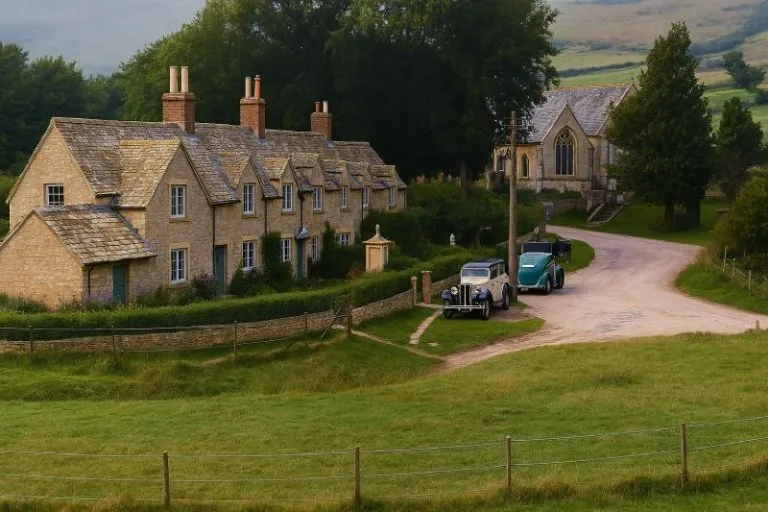
In November 1943, the 252 residents of Tyneham were given 28 days to leave their homes. The British Army needed the valley, along with 3,000 acres of surrounding farmland, as a live firing range in preparation for the D-Day landings. The villagers were told they could return once the war was over. They never did. For the full story of the evacuation, the wartime occupation and the villagers' long fight to return, see our guide to Dorset's ghost village.
Where is Tyneham?
Tyneham Village lies in the Isle of Purbeck, Dorset, between Lulworth Cove and Kimmeridge Bay on England's south coast. The nearest towns are Wareham, about 4 miles to the north, and Swanage, about 10 miles east. Use postcode BH20 5QH for sat-nav.
The village sits in a valley that runs down to the beach at Worbarrow Bay on the Jurassic Coast, a UNESCO World Heritage Site. Above it rises Flower's Barrow, an Iron Age hill fort, and the whole valley lies inside the Army's Lulworth Ranges — which is why Tyneham can only be visited on certain days.
Tyneham sits at 50.6239°N, 2.1601°W. If you're already in the local area, our directions to Tyneham page will get you there.
Dorset's Forgotten Village - A Brief History
Before the evacuation, Tyneham was a working agricultural community. The Smith family ran Tyneham Farm for eighty years, the Taylor family ran the village laundry (all the washing for Tyneham House and the Rectory arrived by cart every Monday morning), and by tradition the shepherd lived in the end cottage of Post Office Row. At Worbarrow Bay, a mile down the valley, a small fishing settlement sold crabs, lobsters and cream teas to day-trippers in the 1930s. The village had its own school, post office, church and rectory, and most residents had lived there their entire lives.
The evacuation of 1943 changed all of that. Read the full history of Tyneham village.
Key Buildings Within The Village
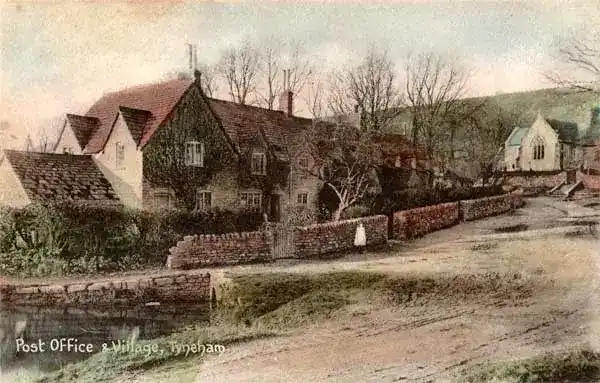
At the centre of the village stands a terrace of four stone cottages known as Post Office Row, built around 1850 and home to the schoolmistress, a farm labourer, the postmistress and the shepherd. Behind it is St Mary's Church, and around the corner the village school of 1856. The Rectory, the post office, Tyneham Farm and the Laundry Cottages (the only building in the village with running water) made up the rest of the community. Outside the post office stands the 1929 K1 telephone kiosk, one of only a handful of its type left in Britain and today the most photographed object in the village.
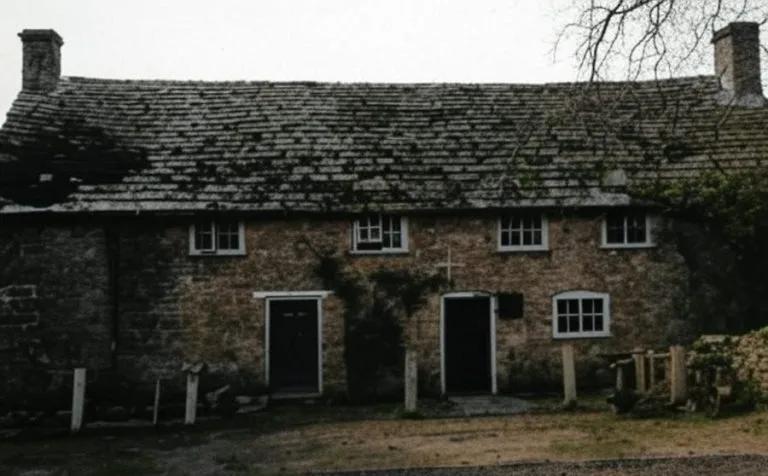
Screened by woodland a short walk from the church stood Tyneham House, the Great House, an Elizabethan manor built between 1563 and 1583 and home to the Bond family, squires of Tyneham, from 1683 until the requisition. The Army demolished most of it in 1973, and the site remains closed to visitors.
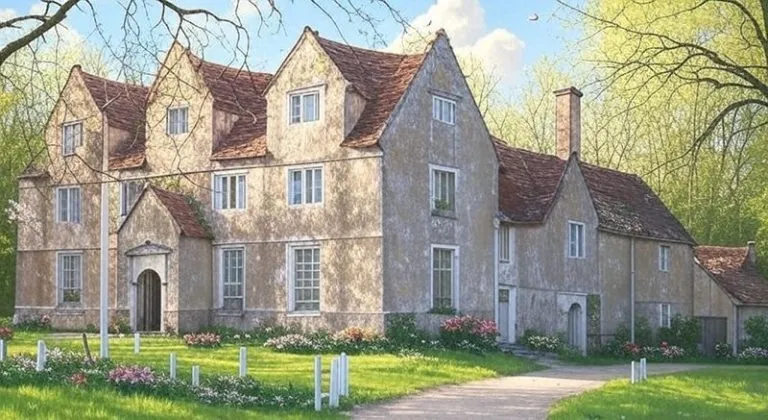
North East View of Tyneham House 1943
Tyneham Village Life
There was no electricity and no mains water. Villagers collected their water from the stone fountain built in 1853, several times a day. The village's only telephone lived in the back room of the post office, used at first for sending and receiving telegrams, until the K1 public kiosk was installed outside in 1929. The school kept detailed records of attendance at village entertainments, cricket matches and the annual harvest. Around 250 people called it home.
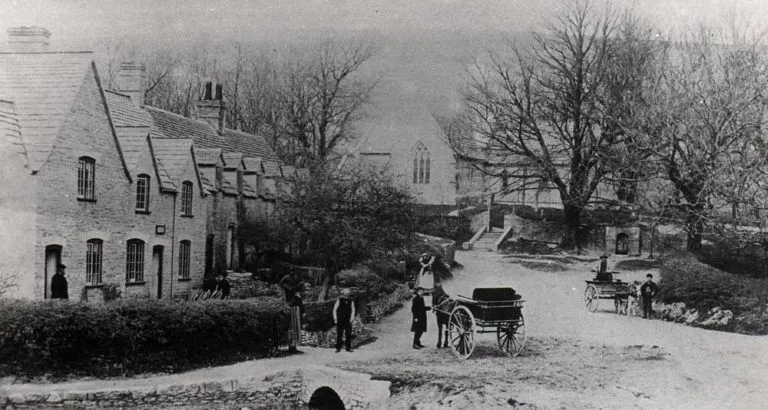
Tyneham village photos — historic and present-day images of the village.
The Tyneham Documentary
The most detailed account of life in Tyneham is from the Tyneham Remembered Documentary. It contains many interviews with the people who lived in the village. Anyone interested in Tyneham village and its history should watch it.
You can buy a copy here on this website as a physical DVD or digital download which you can watch instantly on any device.
By purchasing a copy of Tyneham Remembered, you help keep this website running.

Why Did Tyneham's Inhabitants Leave?
On 16 November 1943, the War Office issued a requisition notice for Tyneham and its surrounding 7,500 acres. The village lay within the Lulworth firing ranges and the military needed the terrain for live-firing exercises in advance of the D-Day landings. Every family, 252 people in total, was given 28 days to pack their belongings and go.
The last church service was held at St Mary's Church on 19 December 1943. Afterwards, the congregation locked the door and walked away from a village that had been continuously inhabited since at least the Norman Conquest. The evacuation took place in bitter December weather during an influenza epidemic, and more than half the ambulances promised for the sick and elderly never arrived. Charlie Miller of Worbarrow, 92 years old and seriously ill, waited twenty-four hours with his household goods packed around him; he died a few days later, begging to be taken home, and was buried at Tyneham by special permission of the Army. Helen Taylor, who had run the village laundry since 1917, was the last to leave. She was the one who pinned the famous note to the church door.
The residents were given a promise — attributed to Churchill's government — that they could return once the war was won. The note pinned to the church door by the departing families expressed their trust in that pledge. After Germany's surrender in 1945, the Army applied to retain the range. In 1948 the request was granted. The villagers never came home.
As they packed up their belongings and left on 19 December 1943, they pinned a note to the door of the village church which read:
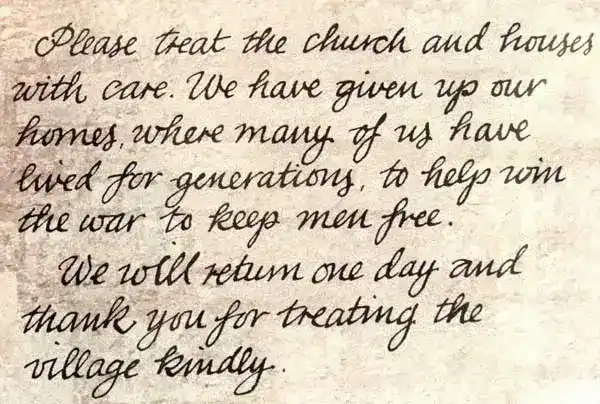
The Note Left on The Church Door
"Please treat the church and houses with care; we have given up our homes where many of us lived for generations to help win the war to keep men free. We shall return one day and thank you for treating the village kindly."
Read more about the note on the church door
Did The Villagers Ever Return?
The promise that residents could return was never kept. After the war the Army retained the range, and despite sustained campaigns through the 1960s and 70s, the village was never handed back.
Nearly all the original evacuees have now died. Their memories were recorded in the Tyneham Remembered documentary while the last survivors were still alive. Descendants of village families, including the Bucklers, the Warrs and the Taylors, still live in the surrounding area, and some have left their own accounts in the comments below.
Tyneham is managed as a heritage site by the Ministry of Defence. It is not National Trust. Entry is free. Please check the opening dates before visiting.
Frequently Asked Questions
Comments on "Tyneham Village"
Tyneham Village opening times powered by official MOD 2026 schedule
Hours: Typically 9am to dusk (exhibitions 10am-4pm). Always confirm via GOV.UK or call 01929 404714.