Flower's Barrow
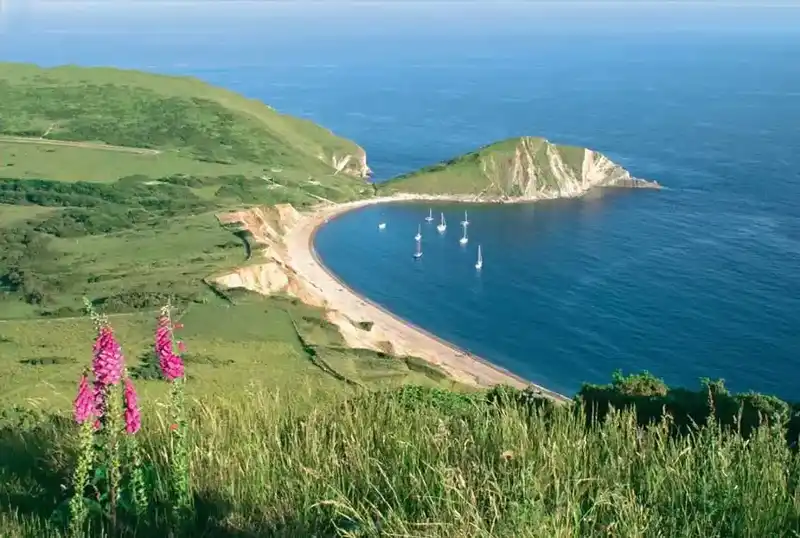
An Iron Age hillfort above Worbarrow Bay
Flower's Barrow is an Iron Age hillfort on the clifftop above Worbarrow Bay, built around 2,500 years ago. The Romans later occupied the site and modified its defences. The earthwork ramparts are still clearly visible today.
The location of Flower's Barrow
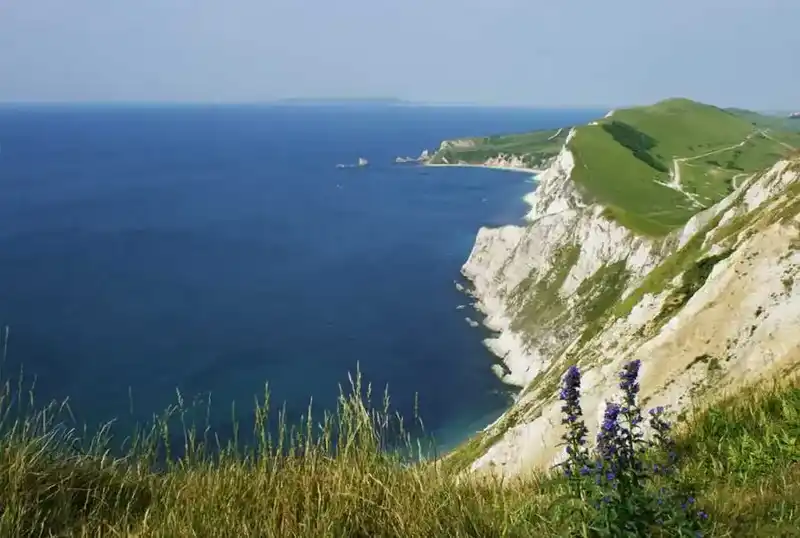
Flower's Barrow sits at the western end of Worbarrow Bay, just a short walk from Tyneham village. The footpath southwest from the village takes you up onto the ridge, passing over Gad Cliff (the sheer limestone headland above Worbarrow Bay) before reaching the hillfort ramparts about 30–40 minutes from the car park. The views over the bay and Chesil Beach in the distance are outstanding.
Walking to Flower's Barrow from Tyneham
The circular walk from the car park to Flower's Barrow and back is about 4–5 miles and takes 2–3 hours, depending on how long you spend at the fort and whether you return via Worbarrow Bay. The climb from the village to the ridge is the hardest part: steady but not technical.
From Tyneham car park (BH20 5QH), head north through the village past the church and school. At the far end of the village, a signed track climbs north up Whiteway Hill. The gradient is steady; halfway up, the view over Worbarrow Bay opens up behind you. At the top, turn left along the ridge.
The ridge walk west to Flower's Barrow is about 1–1.5 miles on mostly level ground, with views north to Poole Harbour, south to Worbarrow Bay and Gad Cliff, and west to Portland on a clear day. The ramparts appear ahead as distinct earthwork ridges crossing the hilltop.
Returning via Worbarrow Bay is the better option if the weather holds. It involves a steep descent from the fort on the South West Coast Path, down to the beach. From there, the flat valley track leads back to Tyneham in about 30 minutes. The descent is the part that catches people out; it is steeper going down than it looks from above, and slippery in the wet.
Boots are necessary. There are no facilities on the route beyond the car park. No mobile signal through most of the ranges; carry a map (OS Explorer OL15).
Ancient origins: a fortified past
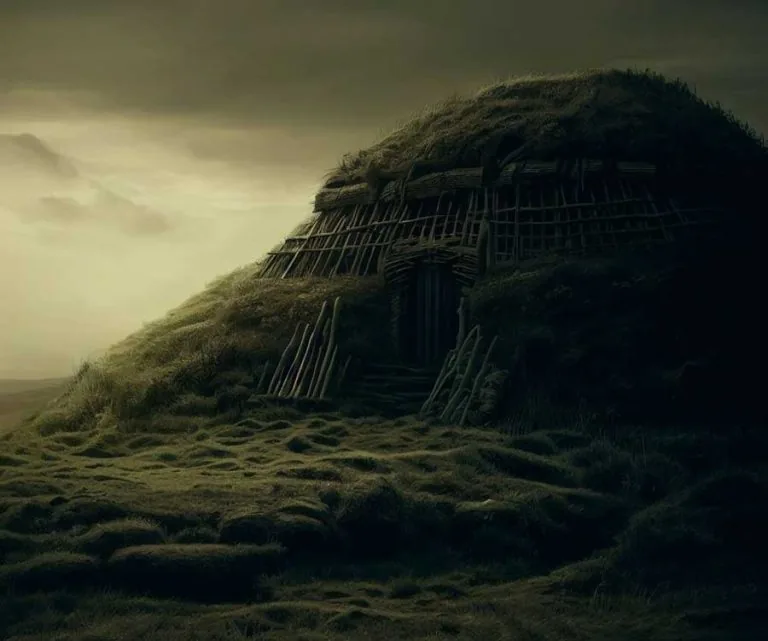
Flower's Barrow began as an Iron Age hillfort around 2,500 years ago. Built on this high, naturally defensible headland, it featured multiple rings of earthen banks and ditches, with timber and stone walls on top.
The complex layout, with several concentric defences, suggests the fort was expanded over time. Inside, an Iron Age community would have lived, farmed the surrounding land, and traded with neighbouring tribes. Part of the fort has been lost over the centuries as the cliff edge has retreated; the southern ramparts now end abruptly at the cliff face above the bay.
The fort meant a great deal to the people of Tyneham below it. Philip Draper, an original village resident and chairman of the Tyneham Action Group that campaigned for the valley's return, singled it out when making the case for the valley's importance: "For archaeologists, there's the Iron Age earthwork encampment on the top of the hill which is the only coastal hill fort in England, and is as good, I think, as Maiden Castle at Dorchester, which is so famous."
Roman conquest: a bridge between eras
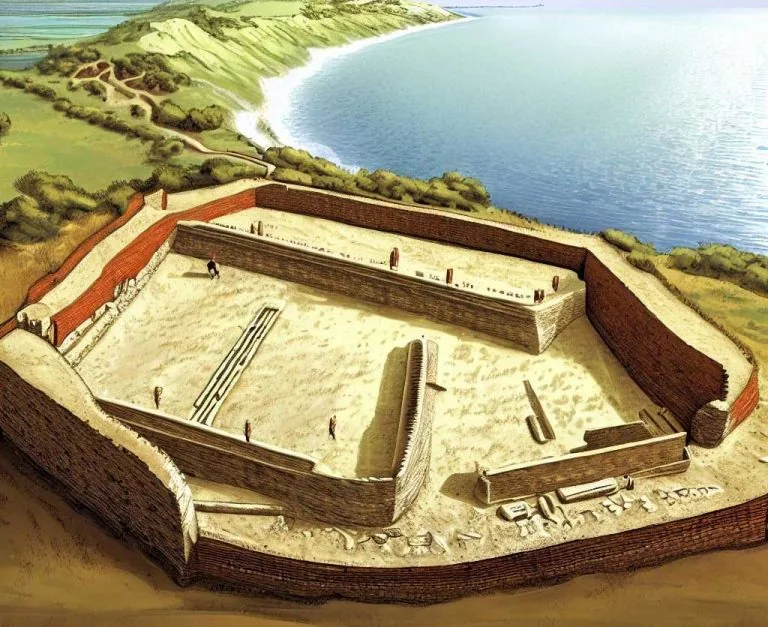
When the Romans arrived in the 1st century AD, they recognised the strategic value of the site and built a fort within the existing hillfort. They modified the defences and added their own structures, including what may have been a bathhouse.
The Roman fort helped control coastal trade and the nearby harbour. A Roman road linked it to Dorchester (Durnovaria), the regional capital.
Abandonment and mystery: the decline of Flowers Barrow
The Roman fort was abandoned sometime in the 4th century AD, possibly due to economic decline or shifting military priorities. After that, the site fell quiet, slowly overtaken by nature.
Excavations and Finds at Flower's Barrow
Modern excavations in the 20th century uncovered coin hoards, pottery, tools, and building foundations, confirming Flowers Barrow's importance in both Iron Age and Roman times.

Flowers Barrow today
Today, Flower's Barrow is managed by English Heritage and offers one of the most rewarding short walks from Tyneham. It forms part of the Lulworth Range walks circuit, which also takes in Worbarrow Bay and Gad Cliff. The earthworks are still clearly visible, and the views over Worbarrow Bay and Chesil Beach are spectacular.
Preservation and conservation
The site is vulnerable to coastal erosion, so visitors are asked to stick to marked paths and respect the fragile earthworks. Ongoing monitoring and conservation work help protect this special place for future generations.
