The Rectory
By James Langton · Updated May 2026
A Victorian rectory
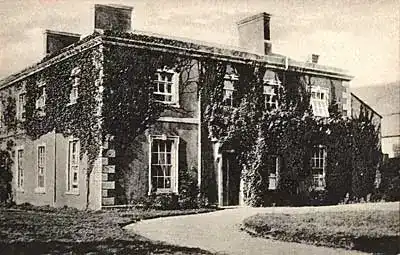
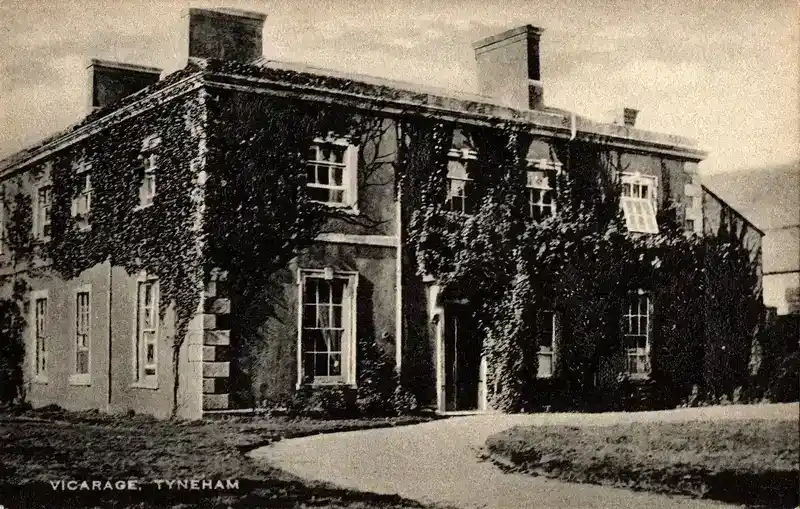
The Rectory was one of the grander buildings in Tyneham - a substantial home easily large enough for a Victorian family with several children and servants. It stood close to the church and served as the heart of parish life for generations of rectors.
The building was constructed in 1853 by the Rector Revd Nathaniel Bond, patron and holder of the Tyneham living, though he lived at Creech Grange and rarely stayed here himself. For the first 32 years of its existence, the Rectory was home to his brother-in-law, Revd William Truell, who served as curate and resident priest. The two men's wives were twin Hawkesworth sisters, making this an unusually close family arrangement.
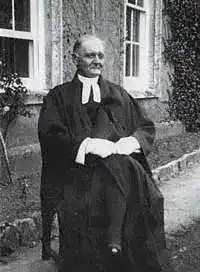
By 1891, the house had been taken over by the Wordsworth family: the census that year records eleven Wordsworths living here alongside four servants. Canon Christopher Wordsworth lived here for many years, making this one of the most populous households in the valley. One of the last rectors to serve the parish was Reverend Frend (pictured below).
As Lillian Bond recalled in her book, the living was considered a good one, but it still required the rector to have some private income. Without a carriage or trap, Mrs Wordsworth - like many village housewives - would regularly walk the twelve miles to Wareham and back for shopping, pushing a pram loaded with goods on top of the baby.
The Rectory itself was an elegant building with a large conservatory filled with exotic plants and even peach trees, plus a private tennis court in the grounds - small luxuries that set it apart from the cottages.
However, the house had one persistent problem: its roof was built at far too shallow a pitch. Heavy storms would drive rain straight into the building, causing frequent leaks. Despite hundreds of pounds spent on repairs over the years (a considerable sum at the time), the problem never fully went away - after every fix, new leaks would soon appear.
A short distance from the main house stood the Rectory Cottages, home in the years before the First World War to the Biles family. Albert Biles was gardener to the Reverend, and was remembered in the village as a crack shot.
The Rectory at War
By 1941 the Rectory stood empty, and the RAF put it to use. The first WAAFs (Women's Auxiliary Air Force) posted to the radar station at nearby Brandy Bay were billeted here, sleeping on iron bedsteads in otherwise bare rooms while the men camped under canvas in the village. One of them, then a 19-year-old radar operator, recalled the arrangement more than sixty years later: as more personnel arrived, the women were moved up to Tyneham House itself, "a beautiful old house that had been in the Bond family for many, many generations". The Rectory's last residents were not clergy at all, but young servicewomen watching the Channel for German aircraft.
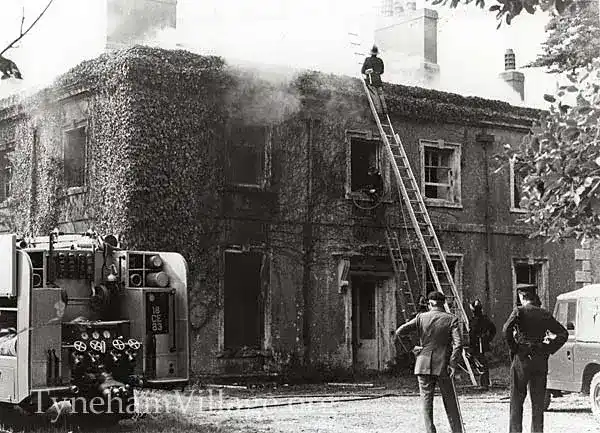
Tragedy struck in the 1960s, long after the village evacuation, when a fire broke out. One of the few farmers still allowed access to the valley had been storing hay and straw inside the building. Somehow it ignited, and fire engines had to be called from Wareham. The damage was severe, leaving the once-elegant house badly scarred.
Today the Rectory is a roofless shell. Visitors can walk through the ground-floor rooms: the walls are intact and the footprint of the house is clear, but the upper floors are gone and the rear is cordoned off due to collapse risk. It is the largest ruined building in the village, and the easiest to read as the substantial household it once was.

