Tyneham School
By James Langton · Updated May 2026
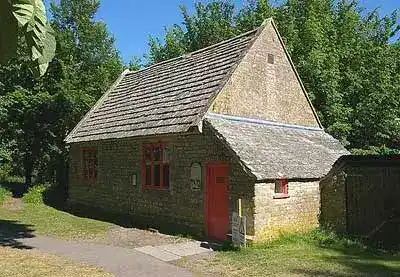
Tyneham Village School, built in 1856, was the heart of education for the local community.
Children from the village itself and from surrounding farms walked - sometimes several miles - to attend classes here. On bad weather days or during outbreaks of illness, numbers could drop sharply, but the school remained a vital part of daily life.
Farming seasons also affected attendance. Many pupils had to stay home to help with harvesting, hedging, ditching, and other essential work on the land - a common reality in rural schools of the time.
A single classroom for all ages
The school was a true one-room setup, with children aged 4 to 14 all taught together. The youngest sat on the stage behind a curtain, learning with simple tools like beads on strings and blunt crayons. It wasn't unusual for even three-year-olds to tag along with older siblings.

Education in the 1920s
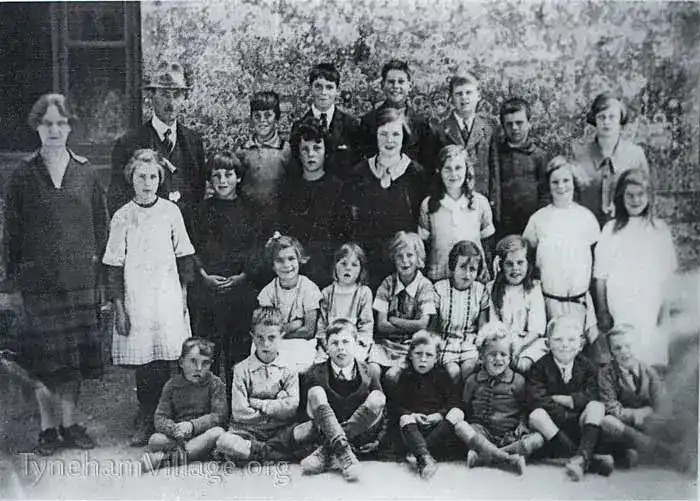
Discipline was strict under head teacher Mrs Pritchard (1921-1928). There was no talking in class, and knuckles were rapped for poor handwriting posture. Children learned joined-up writing from the start, with careful attention to letter spacing. Every morning began with saluting the Union Flag - a routine common across British schools at the time.
Evening entertainments were a highlight - villagers brought their own chairs, children sat on the floor or bookcases, and the room was lit by paraffin lamps while bench desks were moved outside.
Though designed for up to 60 pupils, the school never reached full capacity. When the coastguard station at Worbarrow closed in 1911, nearly half the children left. Numbers continued to fall through the 1920s, and by 1932 only nine pupils remained. The school closed that year and became the village hall, with the remaining children bused to Corfe Castle.
Tyneham School today
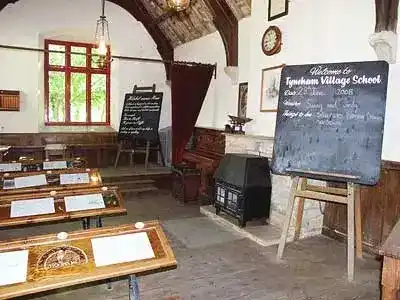
Today the school is the best-preserved room in Tyneham. The interior was carefully recreated in 1994 to show the classroom as it looked in the 1920s, when Mrs Pritchard was schoolmistress, using original furniture and records. The rows of wooden desks still have their inkwells; exercise books lie open with the children's handwriting visible; the nature study books used for identifying local flora and fauna sit on the desks. On the blackboard is the last lesson (on the holly tree), with the names of the final pupils. Children's coats hang on named pegs in the corridor, a cane rests on the teacher's desk, and a portrait of King George V hangs above the fireplace. The building has been Grade II listed since 2020.
The school never had electricity in its working life: lessons were taught by the light of oil lamps on winter afternoons, and the evening entertainments the building hosted for the village were lit by paraffin. Today the school is powered by solar panels on the roof. The same walls that once smelled of lamp oil now run on sunlight; an easy detail to walk past, but worth a moment.
The last entry in the school logbook was made in December 1943, the week before the evacuation. The school had been closed as a working classroom since 1932, but it had remained the village hall. When the families left, they left the room as it was.


