Corfe Castle
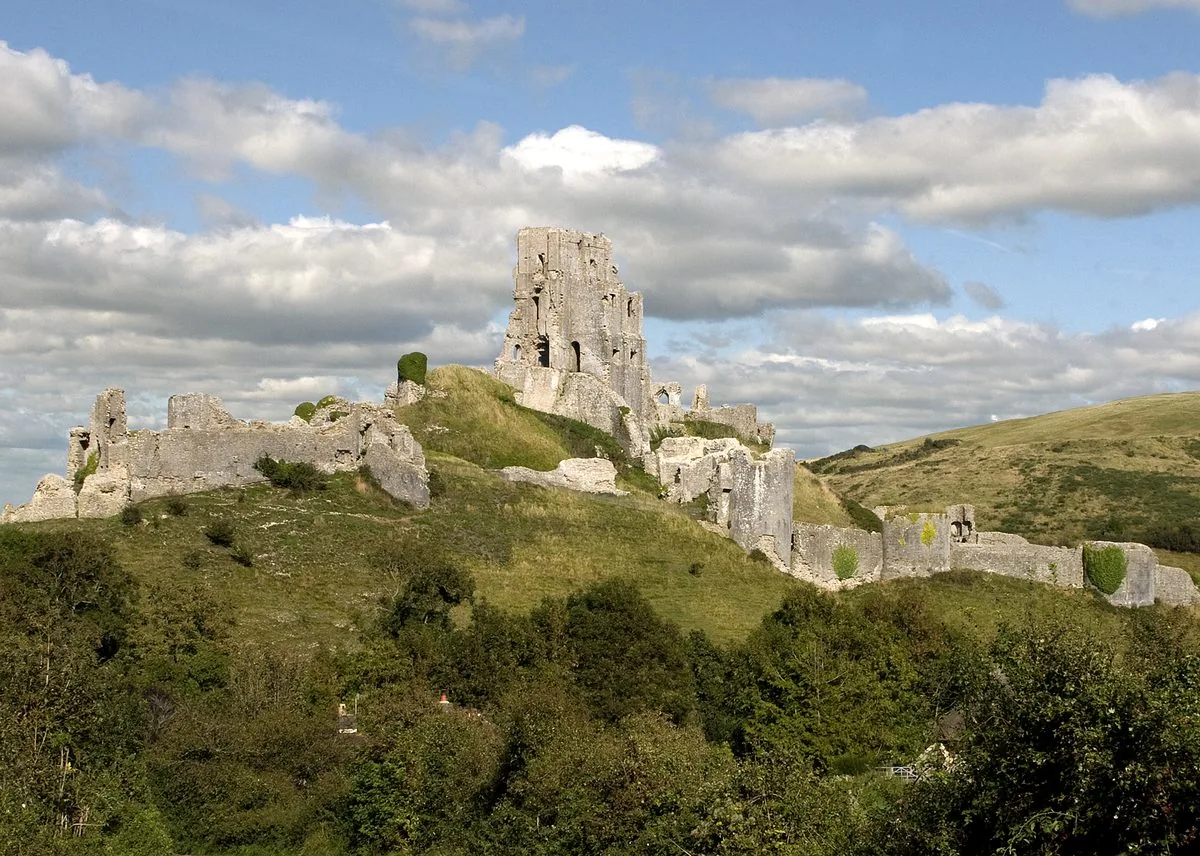
Corfe Castle is one of the most dramatic ruins in England. Perched on a natural hill in a gap in the Purbeck Hills, the castle's broken towers are visible for miles across the Isle of Purbeck, a skyline that has barely changed since Parliamentarian forces blew it apart in 1646.
The village that grew up beneath it shares the same name, and together they make one of the most visited spots on the Dorset coast. For many people, a trip to Corfe Castle and a trip to Tyneham Village go hand in hand: the two sit just 9 miles apart, and the road from Corfe Castle to Tyneham passes through some of the finest countryside in Purbeck.
History of Corfe Castle
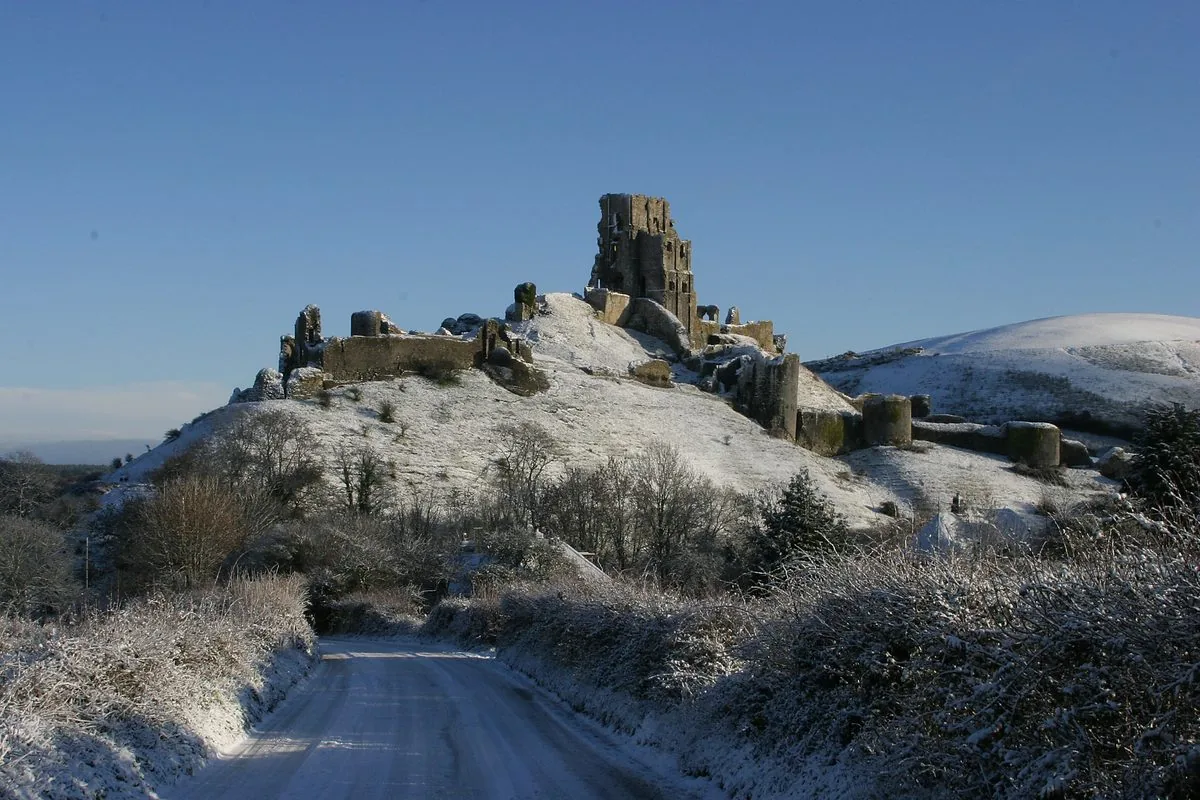
A fortification has stood on this hill since Saxon times. King Edward the Martyr was murdered here in 978 AD, allegedly on the orders of his stepmother. William the Conqueror recognised the strategic value of the site and built the first stone castle in the late 11th century, commanding the only gap through the ridge of Purbeck limestone.
Through the medieval period, Corfe Castle served as a royal palace, a treasury, and a prison. King John used it to hold political prisoners; some sources suggest he starved twenty-two French knights to death within its walls. The Black Death, the Hundred Years War, and the Wars of the Roses all passed while the castle remained a symbol of royal power in the south.
The Siege of Corfe Castle
The castle's most famous chapter came during the English Civil War. When Parliament declared against the King in the 1640s, Corfe Castle was held for the Royalists by Lady Mary Bankes, wife of the Lord Chief Justice. With her husband away in Oxford, she led the defence of the castle against a Parliamentary siege in 1643, reportedly holding the keep with just five men and her household.
The castle held out for nearly four years before falling in 1646 through an act of treachery from within. Parliament ordered it “slighted”: deliberately demolished to prevent it ever being used as a stronghold again. The explosive charges left it in the fractured, leaning state it stands in today, with towers split open and walls tipped at impossible angles.
The Bankes family retained ownership of the ruins, and eventually passed them to the National Trust in 1982. Lady Mary’s courage is still commemorated in the village; her statue stands inside the castle today.
The Bond family connection
Visitors to Tyneham will already know the Bond family, who owned Tyneham House and most of the surrounding land for nearly 260 years until the wartime evacuation of 1943. What is less well known is that the Bonds also had deep ties to Corfe Castle.
John Bond of Grange (a member of the same Purbeck Bond family) served as Member of Parliament for Corfe Castle in 1823 and 1825. Corfe Castle was a rotten borough at the time, one of the small and often corrupt constituencies swept away by the Reform Act of 1832, but the Bond family’s political presence there reflects how closely the landowning families of Purbeck were woven together across the centuries.
To read more about the family that shaped Tyneham, see our page on the Bond Family of Tyneham.

Corfe Castle village
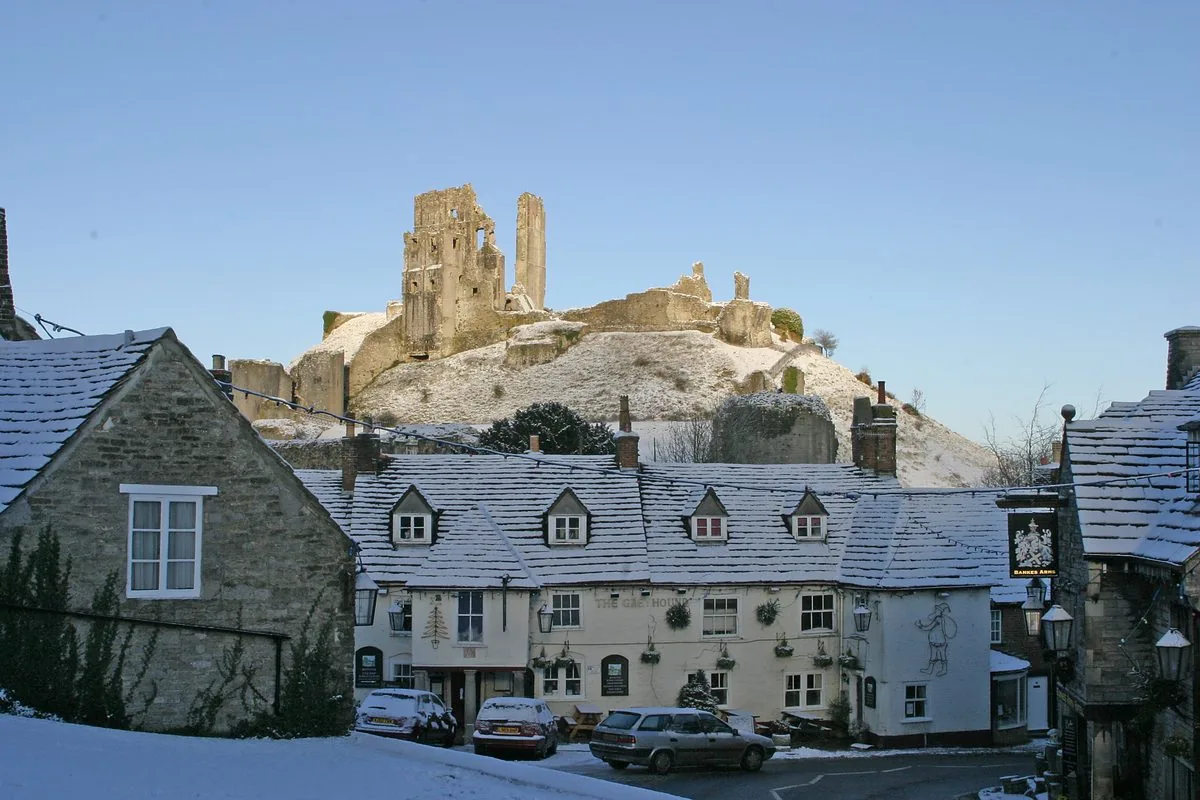
The village of Corfe Castle is worth exploring in its own right. Stone-built cottages line the square and the side streets, and the village has changed little in character since the medieval period. The Bankes Arms on the square is one of the most popular pubs in Purbeck, and there are several tea rooms and cafes for visitors arriving on the Swanage Railway.
The Swanage Railway, a heritage steam railway, stops at Corfe Castle station, making it one of the few visitor attractions in Dorset accessible without a car. Trains run between Swanage and Norden (near Wareham), with Corfe Castle station sitting directly beneath the ruins.
Visiting Corfe Castle
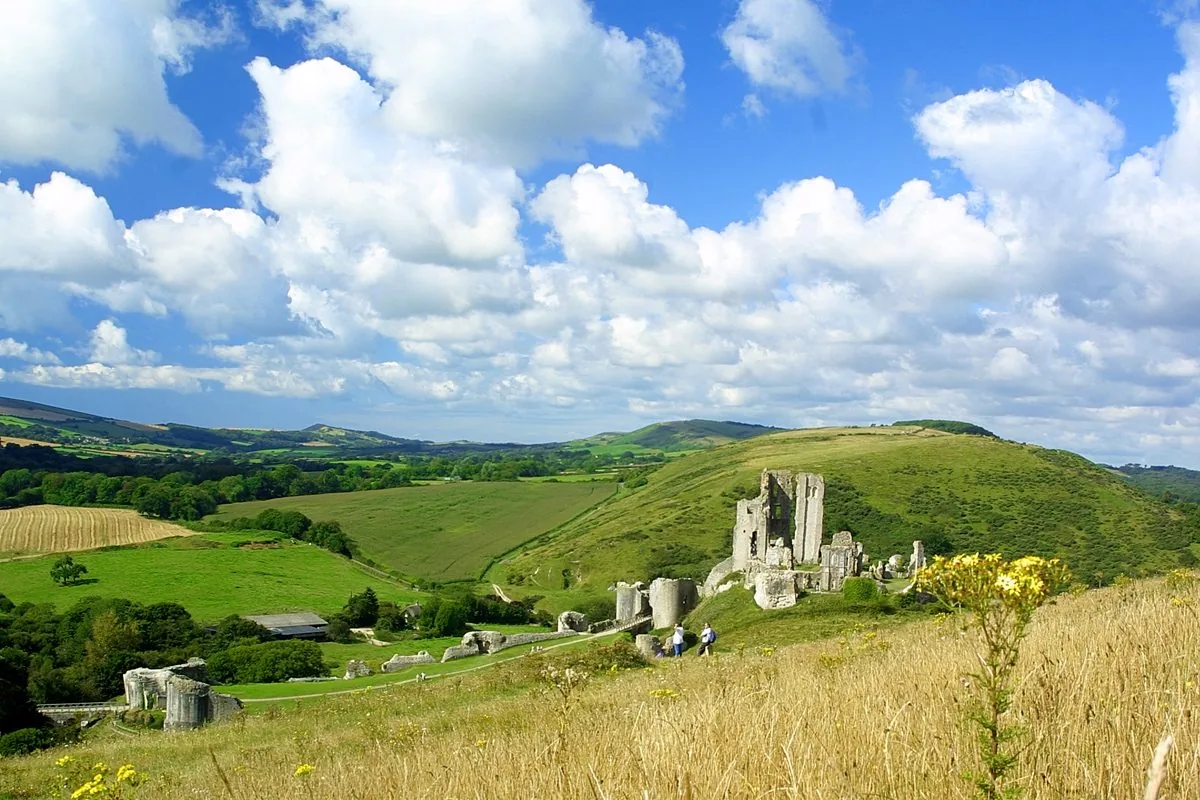
Corfe Castle is managed by the National Trust. Admission is charged for non-members, and the castle grounds and inner ward can be explored on foot. The views from the top of the hill across Purbeck are exceptional on a clear day; you can see across to Tyneham Cap and the ridge that runs above Tyneham valley.
The village car park fills quickly in summer. An early start is recommended, particularly on weekends between June and August.
Getting from Corfe Castle to Tyneham
Many visitors combine Corfe Castle with a visit to Tyneham on the same day. The drive takes around 20 minutes via the Purbeck lanes.
From Corfe Castle village: Leave Corfe Castle towards Wareham on the A351, then take the left turn signposted to Church Knowle, Steeple, Kimmeridge. Go straight through Church Knowle and on through Steeple. At Steeple Leaze Farm the road climbs the hill. At the top, take the left-hand turn. There is no signpost, but look for the Army Ranges gate with a green portacabin alongside. After about a third of a mile, take the road on the left down into Tyneham valley.
Note that Tyneham is only accessible when the Lulworth Ranges are open. See our Tyneham opening times page before you travel.
Kimmeridge Bay (25 minutes south) and Durdle Door (40 minutes south-west) are also within easy reach of Corfe Castle and make natural additions to a longer day out on the Jurassic Coast.

